I still remember the day I first heard about the impact of global events on financial markets. It was during my early days as a data-driven analyst, and I was fascinated by the way a single event could send ripples across the world. The data shows that the current situation in the Gulf is no exception, with the lack of progress in peace talks seeing oil prices creep higher.
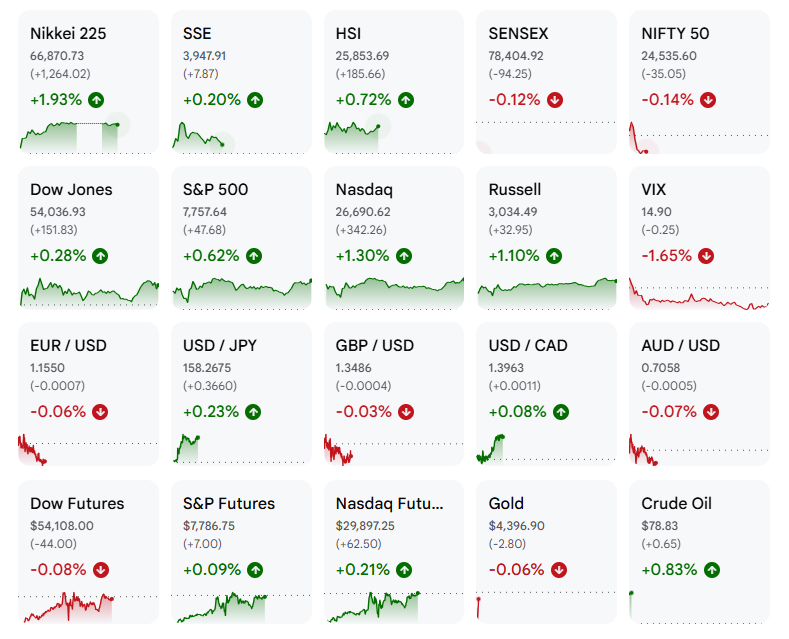
Looking at the numbers, Brent crude added 1.0% to $84.40 a barrel, while US crude rose 0.8% to $78.80 a barrel. The latest revival in fuel costs raises the stakes for the US July consumer price report due on Wednesday, where analysts look for a rise of 0.1% in the headline and 0.2% for the core. Statistically speaking, any upside surprise could rekindle speculation of a hike from the Federal Reserve next month.
Main Story
The futures market has scaled back the chance of a September move to around 44%, from 67% a week ago. The pullback in rate risk helped Treasuries rally on Friday and saw Wall Street close at record highs. Japan’s Nikkei, followed that lead and rose 2.0%, while South Korea added 1.1%. MSCI’s broadest index of Asia-Pacific shares outside Japan, edged up 0.8%.
- The US jobs report showed a softening of the labor market, with a lower-than-expected increase in non-farm payroll employment.
- The lack of progress in Gulf peace talks has led to an increase in oil prices, with Brent crude adding 1.0% to $84.40 a barrel.
- The US July consumer price report is due on Wednesday, where analysts look for a rise of 0.1% in the headline and 0.2% for the core.
As I look at the data, I'm reminded of the importance of considering multiple factors when analyzing financial markets. The data shows that the market is complex and multifaceted, and that no single event or metric can fully capture its dynamics. Looking at on-chain metrics, the data shows that the market is bracing for $125 billion in new issuance this week, with yields on 10-year Treasuries a shade higher at 4.662%.
The Web3 Angle
So, what does this mean for the crypto and web3 world? Statistically speaking, the increase in oil prices and the potential for higher interest rates could lead to a decrease in investor appetite for riskier assets, including cryptocurrencies. However, the data also shows that the crypto market is highly correlated with traditional financial markets, and that events in one market can have a ripple effect on the other.
- The increase in oil prices could lead to higher production costs for miners, potentially affecting the profitability of cryptocurrency mining operations.
- The potential for higher interest rates could lead to a decrease in investor appetite for riskier assets, including cryptocurrencies.
- The correlation between traditional financial markets and the crypto market means that events in one market can have a ripple effect on the other.
Our Take
As a data-driven analyst, I'm always looking for ways to apply my skills to real-world problems. The data shows that the current situation in the Gulf is complex and multifaceted, and that no single event or metric can fully capture its dynamics. Looking at on-chain metrics, the data shows that the market is bracing for $125 billion in new issuance this week, with yields on 10-year Treasuries a shade higher at 4.662%. Statistically speaking, it's clear that the crypto and web3 world is highly correlated with traditional financial markets, and that events in one market can have a ripple effect on the other.
In conclusion, the data shows that the current situation in the Gulf is a complex and multifaceted one, with potential implications for financial markets around the world. As a data-driven analyst, I'll be keeping a close eye on the situation, looking for ways to apply my skills to real-world problems. And as the great investor Warren Buffett once said, "Price is what you pay. Value is what you get."