

I still remember the day I first heard about Bitcoin. It was 2017, and the price had just skyrocketed to nearly $20,000.
I was skeptical at first, but as I dug deeper, I realized this wasn't just a passing fad. The data shows that global equity funds pulled in over $15 billion in the week through Apr. 1, then $23.47 billion, $31.26 billion, and finally $48.72 billion in the week through Apr. 22.
The Liveliness Indicator: A Beacon of Hope?
Despite the stagnant prices, there's a sense of optimism brewing in the crypto community. The Bitcoin "liveliness" metric shows interesting trends:
- We need to do our own research and not rely on hype
- We need to support projects that prioritize transparency
- We need to be aware of the risks involved
Statistically speaking, the correlation between Bitcoin and the S&P 500 is around 0.58, which means that Bitcoin is still trading like a risk asset. Looking at on-chain metrics, the Puell Multiple fell to 0.7 in the first quarter, implying miner revenue ran about 30% below its one-year baseline, a zone that has historically coincided with accumulation periods.
Key Takeaways
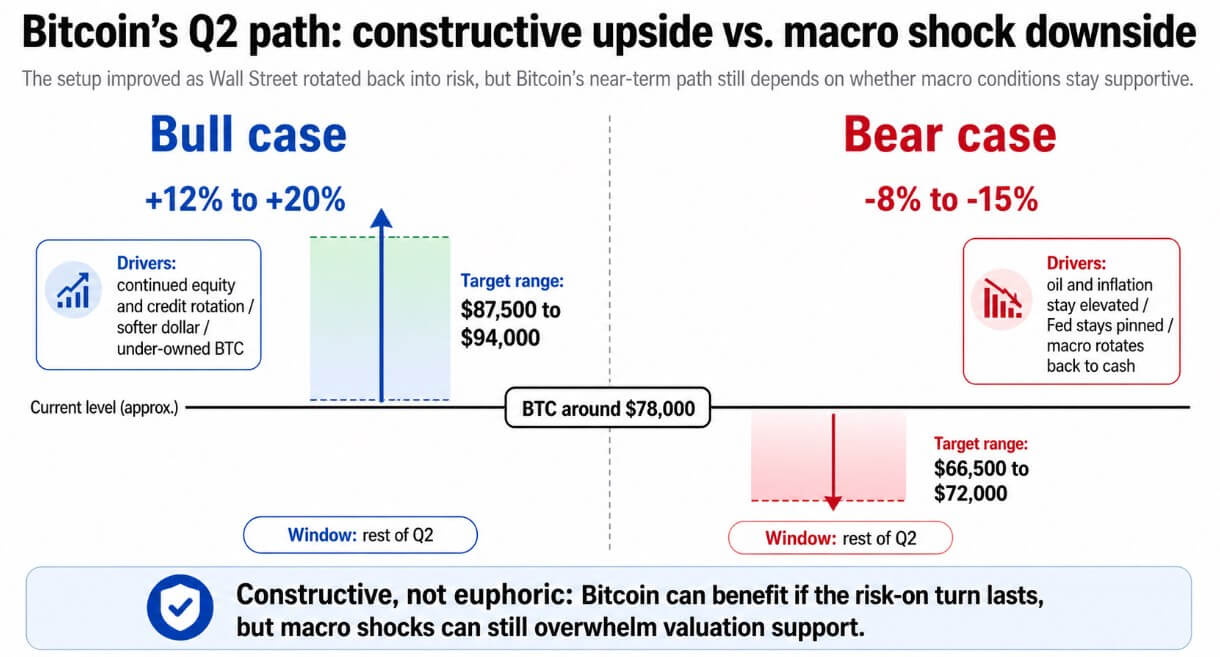
The data shows that 75% of institutional respondents view Bitcoin as undervalued, while 61% of non-institutional respondents hold the same view. This creates a bullish setup for Bitcoin, with a potential price target of $87,500 to $94,000.
- Institutional conviction in undervaluation
- Cleaner on-chain positioning
- Potential for a 12% to 20% gain from current levels
Our Take
As a data-driven analyst, I'm confident in the numbers, but humble about predictions. The data shows that Bitcoin is poised for a potential breakout, but it's essential to remain cautious and aware of the risks involved.
The rest of the quarter will be crucial in determining the direction of Bitcoin's price. If the risk-on rotation continues, we could see a significant increase in Bitcoin's price. However, if macro conditions deteriorate, we could see a drawdown of 8% to 15% from current levels.