

The recent US self-defense strikes in southern Iran have reopened the Bitcoin Iran risk trade, but the market is treating the headline as conditional rather than an automatic crypto selloff.
The data shows that Bitcoin's price has been steady, with a current price of around $77,400. Looking at on-chain metrics, we can see that the market is watching the transmission channel through oil, yields, Fed pricing, and flows. For instance, the price of Brent oil has risen by over 2% to about $98.50 a barrel, while WTI is near $91.95.
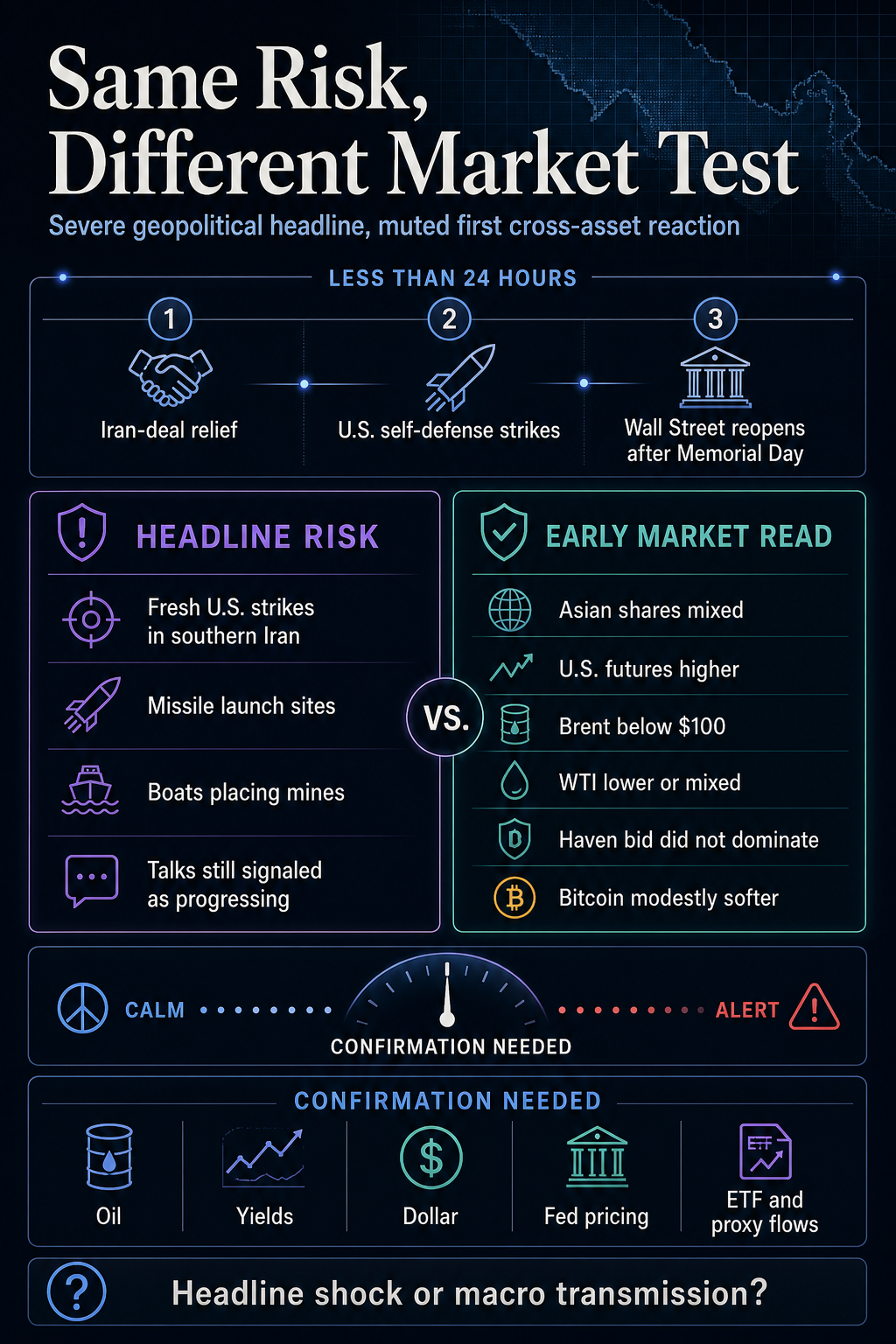
Bitcoin Iran Risk Matters If It Moves Oil
The fresh strikes now test the oil-shock chain. AP reported that a potential deal would gradually reopen the Strait of Hormuz, allow Iranian oil sales through waivers, and leave key uranium details to a 60-day process. Those details affect Bitcoin only through crude supply, inflation pressure, and rate expectations.
Statistically speaking, a hike-risk path would undercut the rates relief behind the prior rally, with a 56% chance of a Fed rate hike by December. This is what Bitcoin cannot ignore: higher crude, firmer inflation expectations, higher real-rate pressure, and a Fed path that leaves less room for liquidity-sensitive assets.
- The price of Brent oil has risen by over 2% to about $98.50 a barrel, while WTI is near $91.95.
- The 10-year Treasury yield is lower, which could tighten the liquidity backdrop for BTC and proxy equities.
- The dollar spot index is little changed, which could pressure risk assets and crypto liquidity.

Bitcoin Is Trading the Confirmation Window
CryptoSlate's live market page shows BTC near $77,400, up 4% since Friday, with about $21.5 billion in 24-hour volume. The aggregate market page showed a total crypto market cap of around $2.5 trillion and Bitcoin dominance of around 60.0%.
Those numbers still leave risk on the board, yet they fit the broader signal: crypto was under pressure, not in headline-driven liquidation. The spot Bitcoin ETF flows backdrop is more sensitive, with Farside showing a -$105.2 million U.S. spot Bitcoin ETF row total on May 22.
- Oil must show whether the inflation problem is returning.
- Rates and the dollar must show whether liquidity conditions are tightening.
- ETF and proxy-equity trading must show whether traditional allocators are reducing exposure after the long weekend.
Our Take
As I look to the future, I'm filled with hope and curiosity. The data shows that Bitcoin's price has been steady, but the market is still treating the headline as conditional. What if the strike headline changes crude, yields, the dollar, ETF demand, and Fed pricing? That distinction gives traders a clear checklist.
For now, the most defensible conclusion is that Bitcoin is entering a live U.S.-open test rather than a confirmed headline-only selloff. The same Iran risk is still there, but traders appear to be demanding proof that it changes oil, inflation, yields, the dollar, ETF flows, and the Fed path before turning the strike into a sustained Bitcoin Iran risk trade.