

The data shows that Bitcoin has been reacting to geopolitical events, such as the potential reopening of the Strait of Hormuz. Looking at on-chain metrics, we can see that Bitcoin's price has been influenced by the uncertainty surrounding the strait's reopening.
Statistically speaking, a credible reopening of the strait could lower the oil-inflation-stagflation premium, while a disputed deal could restore it. The data indicates that oil flows through the strait have been significantly impacted, with a decrease from 20 mb/d in 2024 to roughly 8.8 mb/d since March.
Key Metrics and Implications
Looking at the key metrics, we can see that the share of global seaborne oil trade via Hormuz is around 25%. The data also shows that Middle East crude exports have collapsed from about 18.3 mb/d before the crisis to roughly 8.8 mb/d since March.
- The oil risk premium has been a significant factor in Bitcoin's price movements, with a credible reopening of the strait potentially lowering the premium.
- The 2026 Brent forecast is currently at $90.44/bbl, indicating that analysts are still pricing elevated risk.
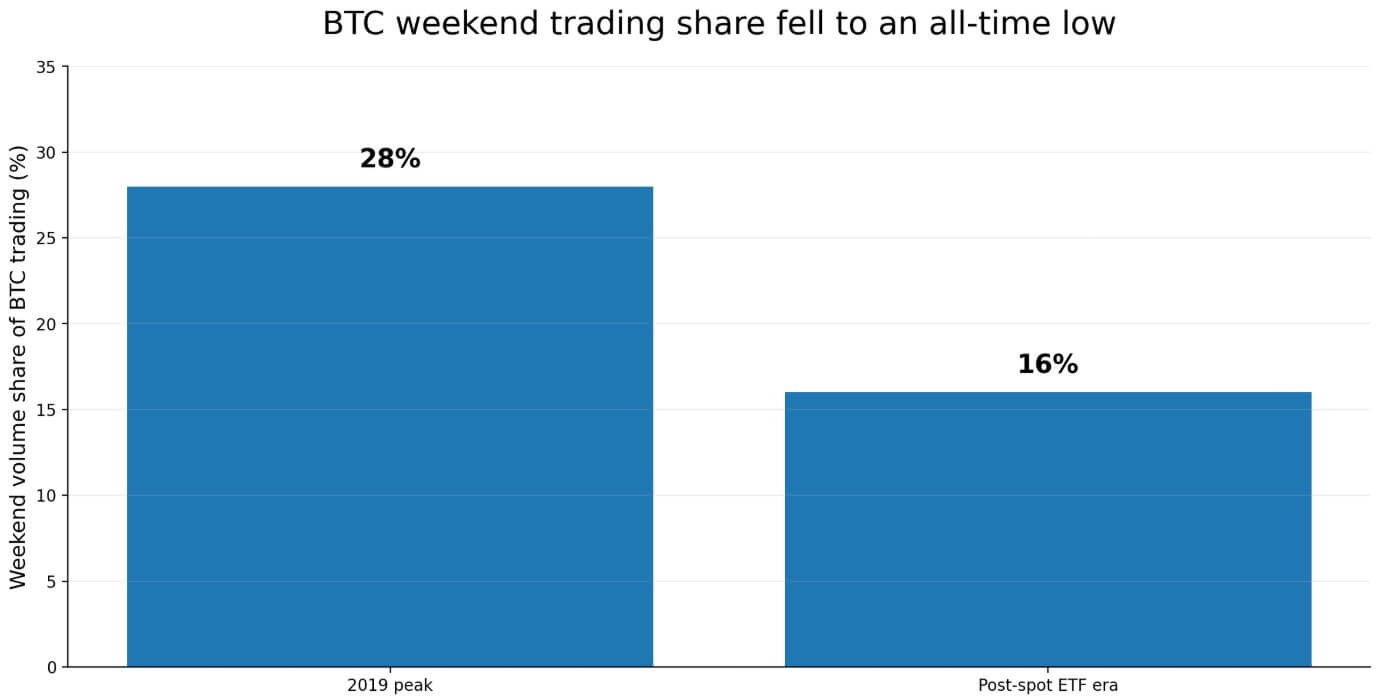
- The data suggests that Bitcoin's weekend volume share has fallen to an all-time low of 16%, down from 28% in 2019.
Bitcoin's Role in Pricing Geopolitical Risk
Bitcoin has been playing a significant role in pricing geopolitical risk, with its price reacting to events such as the potential reopening of the Strait of Hormuz. The data shows that Bitcoin's price has been influenced by the uncertainty surrounding the strait's reopening.
A break above $74.2K-$75K could be a sign of a upside squeeze, while a break below $72.5K could be a sign of a headline fade. The data suggests that the prize Bitcoin traders are actually bidding on this weekend is whether a tentative claim about a strait that moves 20 million barrels a day holds up long enough for oil and equity markets to confirm it.
Our Take
As a data-driven analyst, I believe that Bitcoin's price movements are influenced by a variety of factors, including geopolitical events. The data shows that Bitcoin has been reacting to the uncertainty surrounding the Strait of Hormuz, and it will be interesting to see how the price moves in the coming days.
In conclusion, the data suggests that Bitcoin's role in pricing geopolitical risk is significant, and its price movements will continue to be influenced by events such as the potential reopening of the Strait of Hormuz. As the situation unfolds, it will be essential to keep a close eye on the data and adjust our expectations accordingly.