
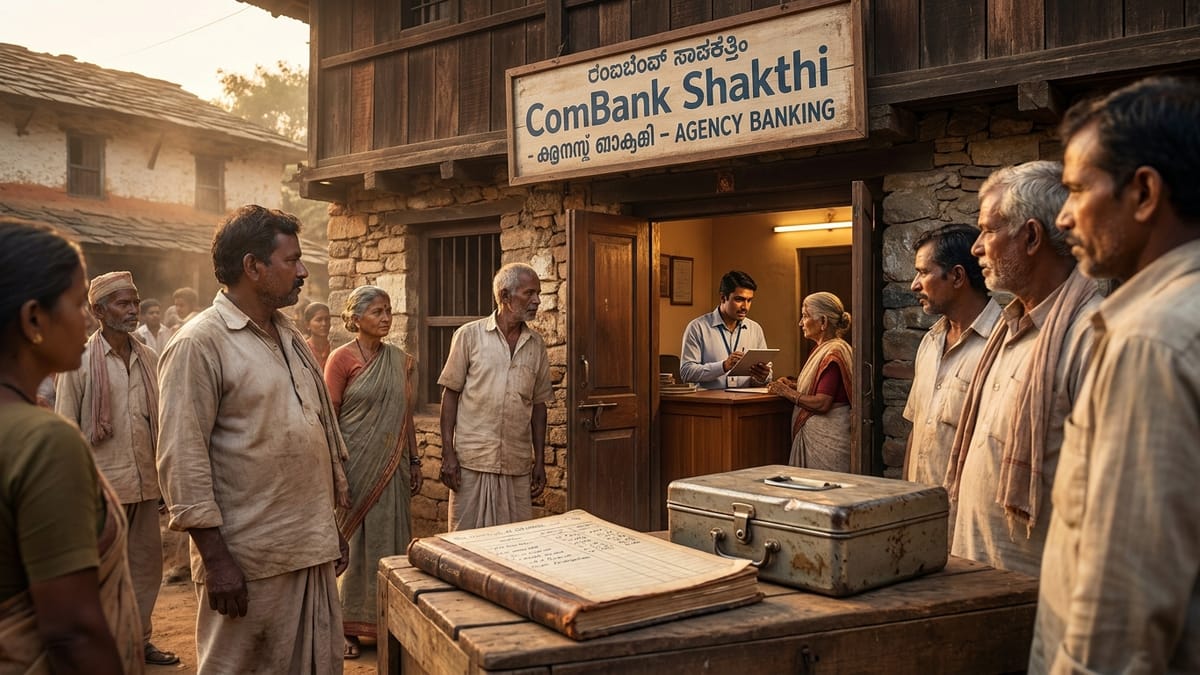
I still remember the day I first heard about the challenges of accessing banking services in rural areas. It was during a trip to a remote village, where I saw firsthand the difficulties people faced in managing their financial needs.
The Commercial Bank of Ceylon has taken a significant step in addressing this issue by expanding its 'ComBank Shakthi' Agency Banking network to 26 strategic locations across the country. This move is expected to bring formal banking services closer to underserved and unbanked communities.
The Agency Banking Model
The 'ComBank Shakthi' Agency Banking model is a innovative approach that enables the Bank to partner with carefully selected third-party agents, typically trusted local businesses or individuals. These agents function as intermediaries between the Bank and its customers, providing essential banking services such as cash deposits, withdrawals, fund transfers, balance inquiries, and bill payments.
- The model is powered by specialised Point of Sale (POS) devices equipped with the Bank's proprietary software, enabling secure, encrypted connectivity with the Bank's core banking systems.
- Transactions are processed in real-time, with customers receiving printed receipts and SMS confirmations, ensuring both reliability and transparency while maintaining the highest standards of security.
- The Agency Banking operations are closely integrated with the activities of the Bank's Agriculture and Micro Finance Units (AMFU), leveraging the strong relationships and community connections built by AMFU staff in rural areas.
The Web3 Angle
Regulators are signaling a growing interest in the potential of blockchain technology to enhance financial inclusion. The legal framework suggests that the use of distributed ledger technology could provide a secure and transparent way to facilitate transactions, particularly in underserved communities. Compliance-wise, the implementation of blockchain-based solutions would require careful consideration of existing regulatory requirements.
As the crypto and web3 communities continue to evolve, it's likely that we'll see more innovative solutions emerge that leverage blockchain technology to promote financial inclusion. For example, the use of stablecoins and remittances could provide a more efficient and cost-effective way to transfer funds, particularly in rural areas where traditional banking services may be limited.
- The use of blockchain-based solutions could provide a secure and transparent way to facilitate transactions, particularly in underserved communities.
- Stablecoins and remittances could provide a more efficient and cost-effective way to transfer funds, particularly in rural areas.
- The implementation of blockchain-based solutions would require careful consideration of existing regulatory requirements.
Our Take
As a policy wonk, I'm excited to see the potential of blockchain technology to enhance financial inclusion. The expansion of the 'ComBank Shakthi' Agency Banking network is a significant step in the right direction, and I'm eager to see how this initiative will evolve in the coming months. One thing is certain - the future of banking will be shaped by innovation and a commitment to serving the needs of all communities.
What if we could use blockchain technology to create a more inclusive and equitable financial system? It's a question that's worth exploring, and one that I'll be keeping a close eye on in the months to come.