
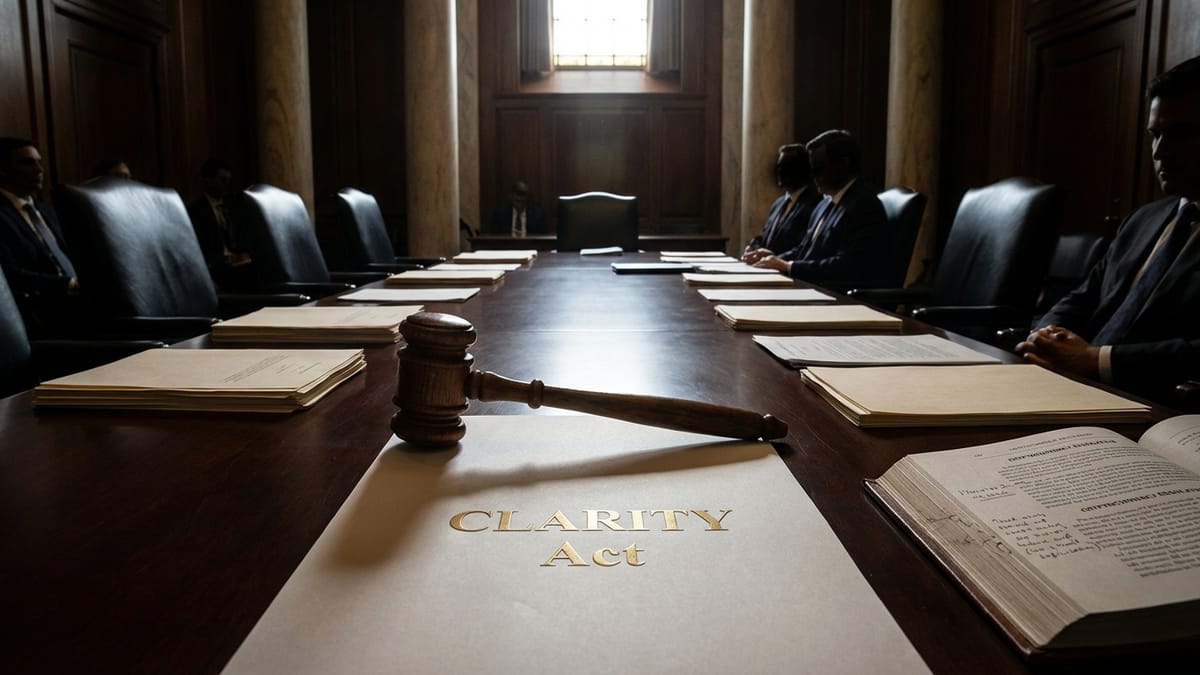
I've seen this before - a well-intentioned piece of legislation that could potentially stifle innovation in the crypto space. The CLARITY Act, a crypto-focused markets structure bill, is set to be discussed at a markup session, and one of its provisions has Coinbase threatening to pull its support. The issue at hand is a proposed ban on stablecoin rewards, which could limit the growth of these assets and hinder their potential to bring stability to the crypto market.
Back in 2017, when the crypto market was still in its Wild West phase, I remember thinking that regulations would be a welcome addition to the space. And they are - to a certain extent. But what many newcomers don't realize is that over-regulation can be just as harmful as a lack of regulation. The crypto space is all about innovation and pushing boundaries, and excessive regulations can stifle that innovation and drive it underground.
The Proposed Ban on Stablecoin Rewards
The proposed ban on stablecoin rewards is a prime example of how regulations can go too far. Stablecoins are designed to be low-volatility assets that can provide a safe haven for investors during times of market turmoil. By offering rewards, stablecoin issuers can incentivize users to hold and use their assets, which can help to increase adoption and drive growth. But if the CLARITY Act is passed with the ban on rewards intact, it could limit the ability of stablecoin issuers to compete with other assets and hinder their potential to bring stability to the crypto market.
- The ban on stablecoin rewards could stifle innovation and limit the growth of stablecoins
- It could also drive innovation underground, making it harder for regulators to track and monitor the space
- Furthermore, it could have unintended consequences, such as pushing users towards unregulated or offshore exchanges
As I look at the current state of the crypto market, I'm reminded of the importance of finding a balance between regulation and innovation. The crypto space is all about pushing boundaries and exploring new frontiers, and excessive regulations can stifle that innovation and drive it underground. It's a delicate balance, but one that's essential for the long-term health and growth of the space.
What's at Stake
The outcome of the markup session could have significant implications for the crypto industry. If the CLARITY Act is passed with the ban on rewards intact, it could limit the ability of stablecoin issuers to compete with other assets and hinder their potential to bring stability to the crypto market. On the other hand, if the ban is removed or modified, it could provide a boost to the industry and help to drive growth and adoption.
- The outcome of the markup session could have significant implications for the crypto industry
- It could impact the growth and adoption of stablecoins
- It could also have broader implications for the entire crypto space, including the development of new assets and technologies
Our Take
As a battle-tested crypto veteran, I've seen my fair share of regulatory battles. And I've got to say, this one has all the makings of a classic showdown between innovation and regulation. Our Take is that the CLARITY Act, as it stands, could do more harm than good. By banning stablecoin rewards, it could stifle innovation and limit the growth of these assets, which could have unintended consequences for the entire crypto space.
So, what's the solution? In my opinion, it's all about finding that delicate balance between regulation and innovation. We need to create a regulatory framework that allows for innovation and growth, while also protecting users and preventing abuse. It's a tough nut to crack, but I'm hopeful that we can get there. After all, as the saying goes, "the best way to predict the future is to invent it". And I firmly believe that the crypto space has the potential to invent a brighter, more prosperous future for all of us.