

I've seen this before - the crypto market's potential being hindered by regulatory uncertainty. Back in 2017, the lack of clear guidelines was a major obstacle for investors and projects alike. What many newcomers don't realize is that regulatory clarity is crucial for the long-term growth and adoption of cryptocurrency.
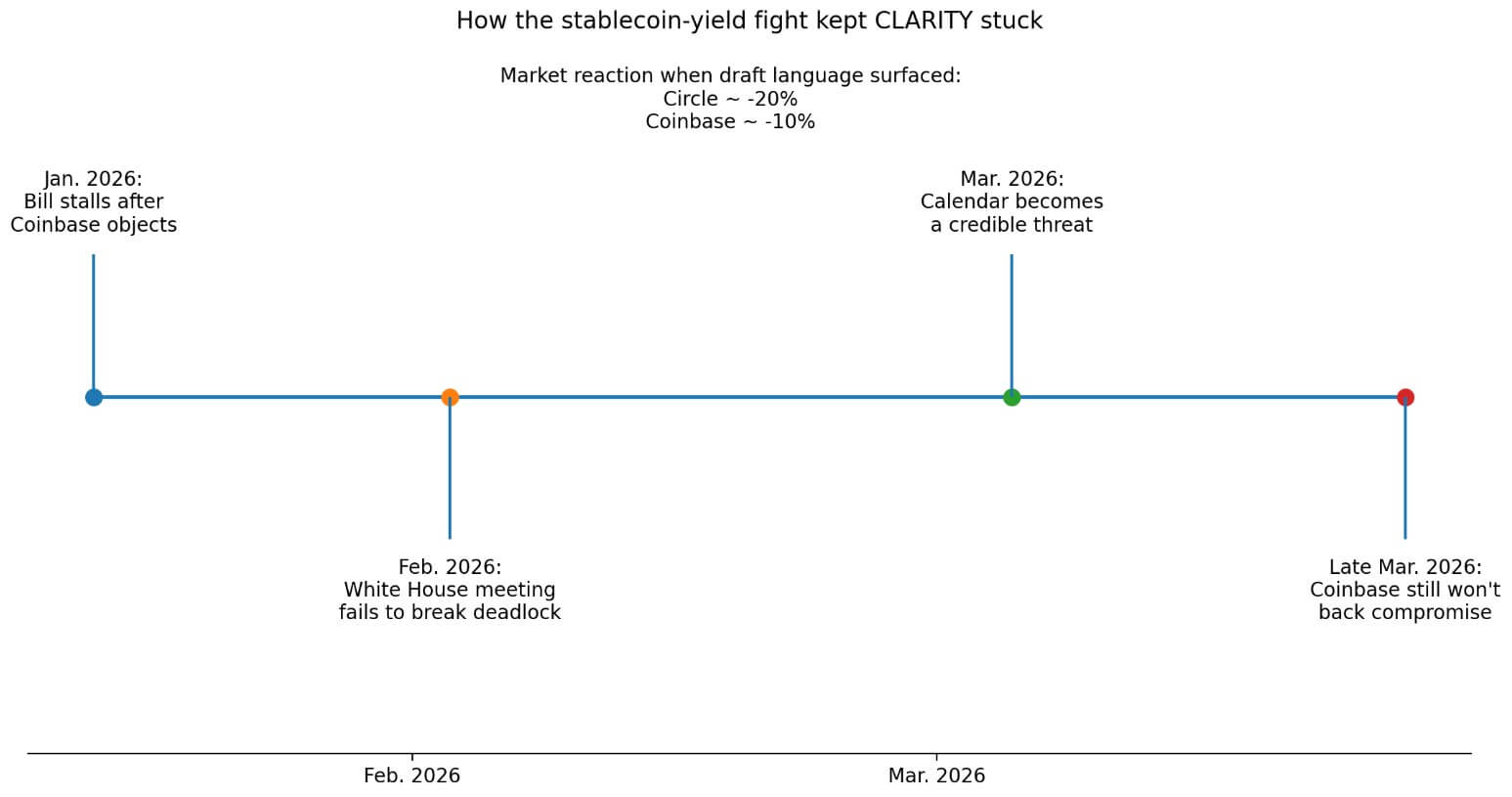
The current standoff over the CLARITY Act, particularly the issue of stablecoin rewards, is a prime example of this challenge. Banks are pushing to close what they see as a loophole that allows exchanges to pay passive rewards on idle balances, while crypto firms argue that banning rewards is anti-competitive and weakens user acquisition.
The CLARITY Act's Broader Implications
The CLARITY Act is not just about stablecoins; it's about creating a clear regulatory framework for the entire US crypto market. This includes defining when tokens are securities, commodities, or otherwise, and granting the CFTC authority over spot crypto markets.
- The Act aims to provide a disclosure-based exemption for qualifying digital commodity offerings.
- It sets rules for secondary-market treatment, insider sales, and when a network is considered "mature".
- The bill preserves self-custody rights, allowing individuals to use hardware or software wallets for lawful self-custody and engage in peer-to-peer digital asset transactions.

Developers, Interfaces, and the Code-vs-Control Line
The CLARITY Act excludes certain DeFi-related activities from SEC and CFTC regulation, including validating, node and oracle operation, publishing and updating software, developing wallets, providing user interfaces, and publishing blockchain systems.
- These protections are crucial for developers, who currently operate under significant legal ambiguity.
- The Act's provisions would narrow legal risk for builders and draw a clearer line between writing code and operating a financial intermediary.
- By preserving self-custody rights, the bill addresses a foundational question about American crypto ownership.
Our Take
As a battle-tested crypto veteran, I believe that regulatory clarity is essential for the growth and adoption of cryptocurrency. The CLARITY Act's impasse over stablecoin rewards is a symptom of a broader issue - the lack of clear guidelines for the US crypto market.
The future of crypto in the US hangs in the balance, and the outcome of the CLARITY Act will have far-reaching implications for market growth, institutional adoption, and regulatory clarity. As I've seen before, the crypto market's potential can be hindered by regulatory uncertainty, but with clear guidelines, it can thrive.