

I've seen this before - the promise of easy, automated yields in DeFi, only to be followed by a string of exploits and losses. Back in 2017, the crypto space was filled with excitement and hype, but we've learned that the devil is in the details. What many newcomers don't realize is that DeFi's automated yield protocols are built on complex systems that can be vulnerable to attacks.
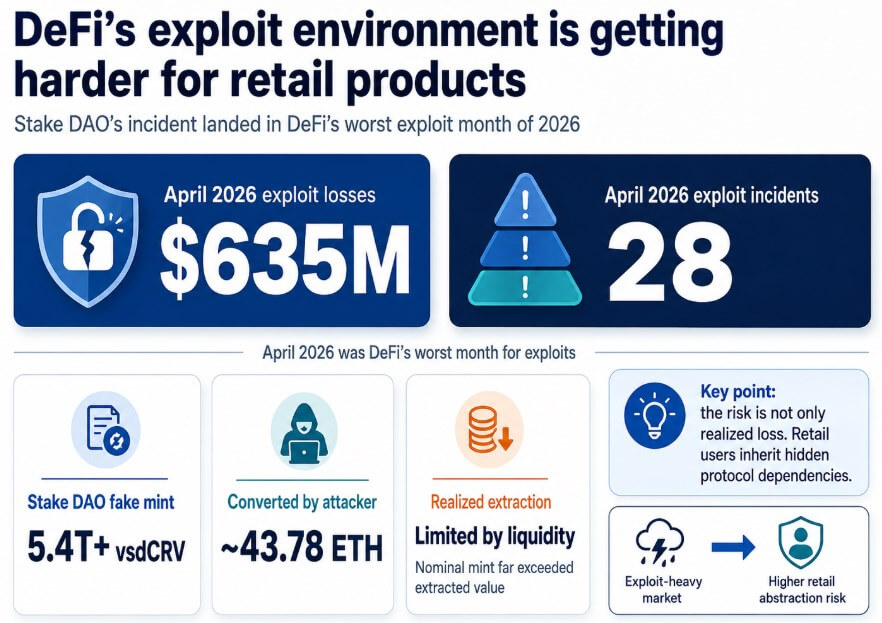
The recent Stake DAO exploit is a prime example of this. An attacker was able to mint over 5.4 trillion vsdCRV, resulting in significant losses for users. This incident highlights the need for better governance and security measures in DeFi protocols. As Ido Ben-Natan, co-founder and CEO of Blockaid, notes, "Wherever there is value on-chain, there will be attackers trying to exploit it, and that's true regardless of how simple or complex a protocol's strategy is."
The Hidden Risks of Automated Yield Protocols
Automated yield protocols are designed to simplify the process of earning yields, but they often hide the complexity of the underlying systems. This can make it difficult for users to understand the risks involved and make informed decisions. As Manuel Aráoz, co-founder of OpenZeppelin, notes, "All of DeFi is unsafe" due to the increasing use of AI-powered attacks.
- Users are often unaware of the risks involved in automated yield protocols
- Protocols may not have adequate governance and security measures in place
- The use of AI-powered attacks is increasing, making it harder for protocols to stay secure
The incident pattern that defined April extends through the rest of the year, and each new incident reinforces the perception that yield automation bundles risks that users cannot independently evaluate. In the bear case, more key compromises, bridge incidents, oracle contagion, and vault pauses drive an abstraction discount into automated yield products.
The Need for Transparency and Security
As the frequency of exploits increases, users are becoming more cautious and demanding higher returns to compensate for the risks. Protocols must now prioritize transparency, security, and risk management to regain user trust. This includes implementing real-time transaction validation, multisig controls, formal verification, and risk dashboards.
- Protocols must prioritize transparency and security to regain user trust
- Real-time transaction validation and multisig controls can help prevent exploits
- Formal verification and risk dashboards can help identify and mitigate risks
The next automated yield product to win retail trust will earn it by showing users which parts of the stack are monitored, controlled, and isolated, and what the protocol does when any one part fails. As Ben-Natan notes, "Hackers are increasingly leveraging AI to move faster and find new attack vectors. However, on-chain cybersecurity providers like Blockaid have deep experience using AI to stay well ahead."
Our Take
As a seasoned crypto veteran, I've seen the ups and downs of the market. While DeFi's automated yield protocols offer promise, they also pose significant risks. It's essential for users to be aware of these risks and for protocols to prioritize transparency, security, and risk management. Only then can we build a more secure and sustainable DeFi ecosystem.
In conclusion, DeFi's automated yield protocols are not a guaranteed way to earn yields, and users must be cautious of the hidden risks involved. By prioritizing transparency, security, and risk management, protocols can regain user trust and build a more sustainable future for DeFi.