
I still remember the day I first heard about Bitcoin. It was 2017, and the price had just skyrocketed to nearly $20,000. I was skeptical at first, but as I dug deeper, I realized this wasn't just a passing fad. Back in 2017, the crypto market was filled with hype and speculation, but I've seen this before and knew that fundamentals would eventually prevail.
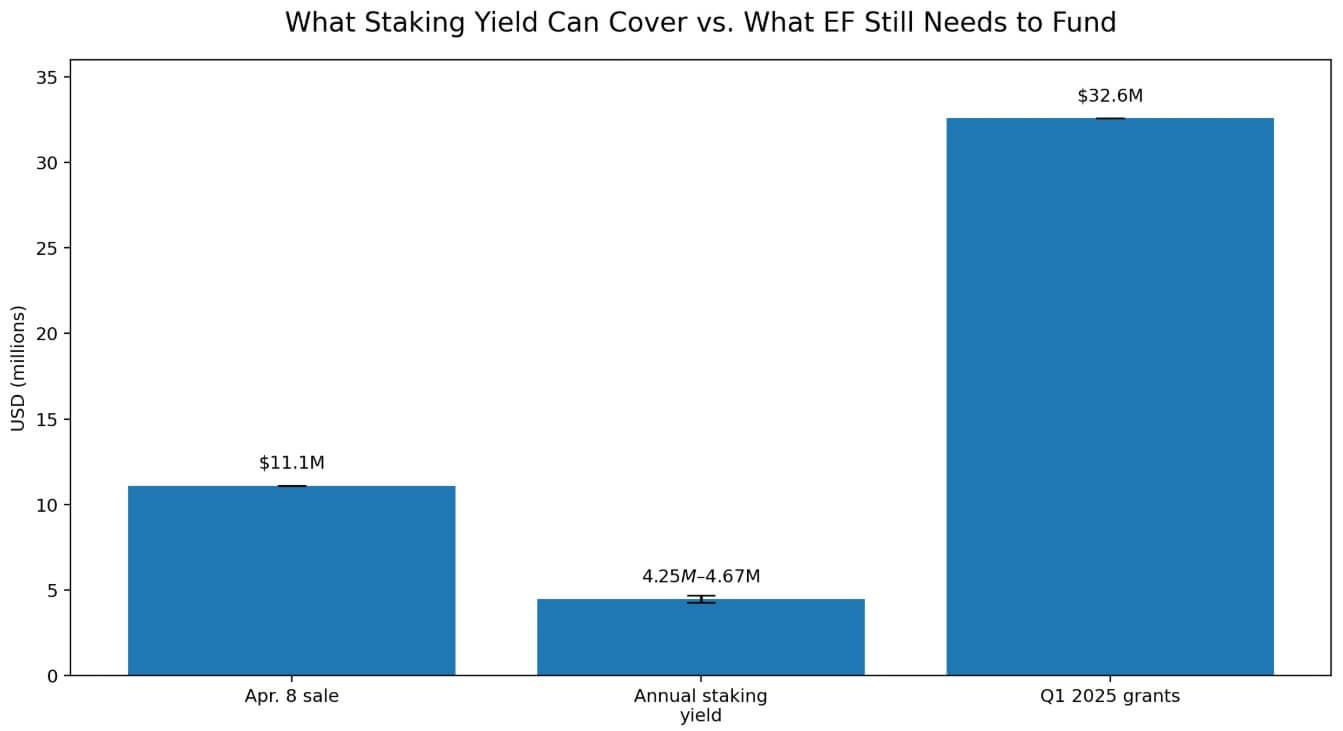
The Ethereum Foundation's recent sale of 5,000 ETH has sparked debate about the foundation's treasury strategy. What many newcomers don't realize is that the foundation's treasury policy is designed to maintain a fiat-denominated operating buffer, which implies a need to sell ETH periodically. Despite staking 70,000 ETH, the foundation still needs to sell ETH to fund its operations.

The Crypto News and Web3 Implications
The Ethereum Foundation's move has implications for the crypto market and highlights the importance of understanding the foundation's treasury policy. As a crypto veteran, I've seen how market narratives can be misleading, and it's essential to look at the facts. The foundation's strategy is designed to maintain a fiat-denominated operating buffer, which implies a need to sell ETH periodically.
- The Ethereum Foundation's treasury policy is designed to maintain a fiat-denominated operating buffer
- The foundation needs to sell ETH periodically to fund its operations
- Staking and DeFi deployment are part of the foundation's treasury strategy, but they don't replace the need to sell ETH
Potential Outcomes
The bull case for the Ethereum Foundation rests on straightforward treasury arithmetic, as a higher ETH price and a lower long-run opex ratio would allow the foundation to maintain its dollar buffer while monetizing fewer coins. However, the bear case runs through the same framework in reverse, as the foundation's reserve target is denominated in fiat terms.
- The bull case: higher ETH price and lower opex ratio allow the foundation to maintain its dollar buffer while monetizing fewer coins
- The base case: mixed strategy continues, with staking, DeFi, borrowing, and periodic sales coexisting
- The bear case: weaker ETH price forces more monetization to preserve runway, especially if the foundation leans into its counter-cyclical mandate
The Ethereum Foundation's treasury strategy is complex and multifaceted. As a crypto veteran, I've seen how market narratives can be misleading, and it's essential to look at the facts. The foundation's strategy is designed to maintain a fiat-denominated operating buffer, which implies a need to sell ETH periodically.
Our Take
As a battle-tested crypto veteran, I've seen this before, and I believe that the Ethereum Foundation's treasury strategy is a smart move. The foundation needs to maintain a fiat-denominated operating buffer, and selling ETH periodically is a necessary part of that strategy. However, the market narrative extended beyond the written policy and beyond the foundation's own post-staking transaction record.
The key takeaway is that the Ethereum Foundation's treasury strategy is complex and multifaceted. As the crypto market continues to evolve, it's essential to stay informed and up-to-date on the latest crypto news and web3 developments.