
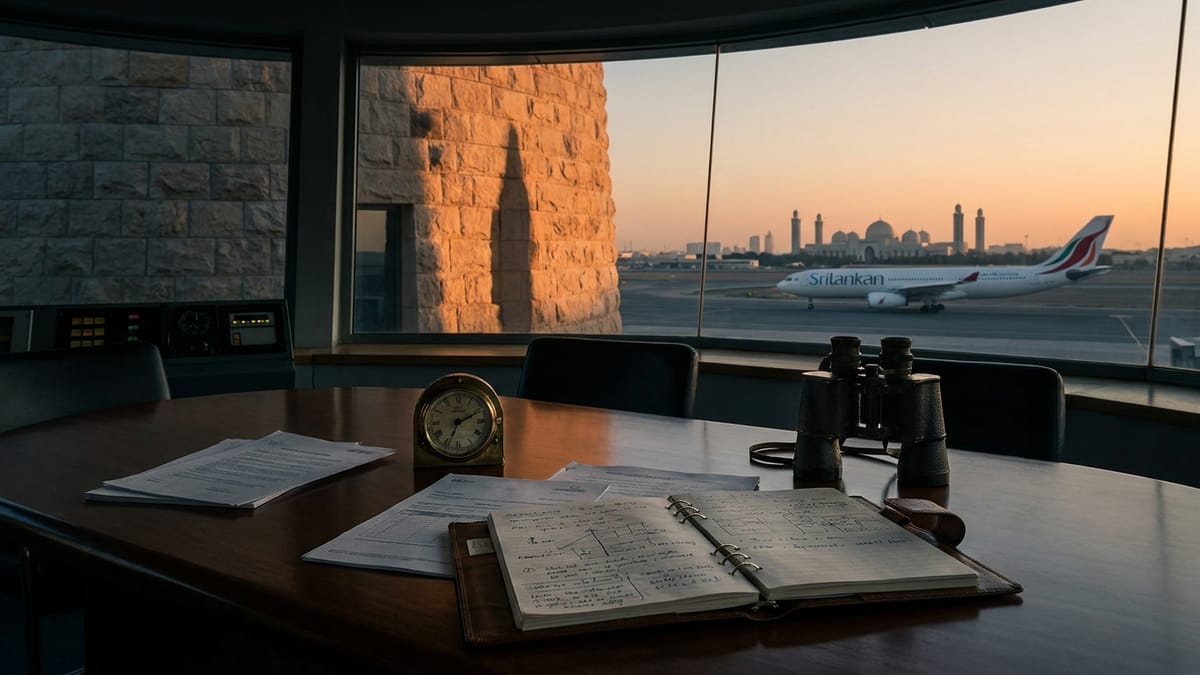
I still remember the day I first heard about the importance of air travel in global commerce. It was during a conference on international trade, where speakers emphasized the role of airlines in connecting businesses and communities worldwide.
Today, the news of SriLankan Airlines cancelling multiple flights due to Middle East airspace restrictions brings this topic back into focus. The emission schedule of flights, much like the emission schedule of tokens, relies on a delicate balance of supply and demand. When disruptions occur, it can have a ripple effect on the entire ecosystem.
Main Story
The affected routes include flights between Colombo and several regional destinations, namely Dubai, Doha, Dammam, Riyadh, and Kuwait City. Token utility drives the demand for air travel, and in this case, the closure of airspace in certain parts of the Middle East has reduced the utility of these flights.
The airline has taken a prudent decision to prioritize passenger safety and wellbeing, noting that the situation stems from ongoing regional airspace restrictions. Economic sustainability requires a long-term perspective, and in this case, the airline's decision may have short-term costs but will ultimately benefit the passengers and the airline itself.
- UL231 Colombo – Dubai
- UL232 Dubai – Colombo
- UL225 Colombo – Dubai
- UL226 Dubai – Colombo
- UL217 Colombo – Doha
- UL218 Doha – Colombo
- UL253 Colombo – Dammam
- UL254 Dammam – Colombo
- UL265 Colombo – Riyadh
- UL266 Riyadh – Colombo
- UL229 Colombo – Kuwait
- UL230 Kuwait – Colombo
The Web3 Angle
As I analyze the economic impact of this disruption, I am reminded of the potential for crypto and web3 technologies to mitigate such risks. Stablecoins, for instance, can provide a hedge against currency fluctuations, while blockchain-based systems can facilitate more efficient and secure transactions.
Tokenization of assets, such as flight tickets or travel insurance, can also provide new opportunities for investors and travelers alike. The crypto news and web3 news communities are abuzz with the potential for decentralized finance (DeFi) to disrupt traditional financial systems, and events like this highlight the need for innovative solutions.
Analysis and Context
The cancellation of flights due to airspace restrictions is a reminder of the complexities and uncertainties of global commerce. As a tokenomics specialist, I believe that understanding the economic models and incentives behind such decisions is crucial for building resilient and sustainable systems.
Token utility drives the demand for air travel, and in this case, the closure of airspace in certain parts of the Middle East has reduced the utility of these flights. However, this disruption also presents an opportunity for innovation and growth, particularly in the crypto and web3 spaces.
- The importance of air travel in global commerce
- The potential for crypto and web3 technologies to mitigate risks
- The need for innovative solutions in the face of disruptions
Our Take
As I reflect on this situation, I am reminded of the importance of long-term thinking and economic sustainability. The emission schedule of flights, much like the emission schedule of tokens, requires a delicate balance of supply and demand.
In the world of crypto and web3, we often talk about the potential for decentralized systems to disrupt traditional industries. However, events like this remind us that there are still many complexities and uncertainties to navigate. As we move forward, it's essential to prioritize economic sustainability and token utility, while also embracing innovation and growth.