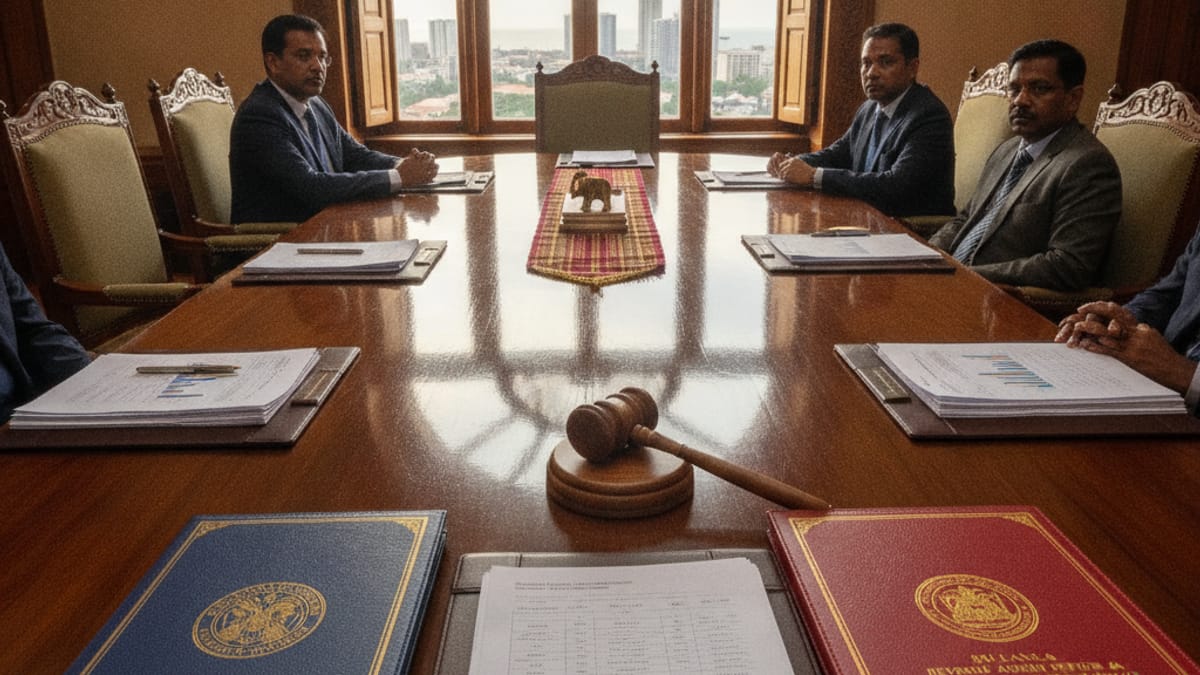
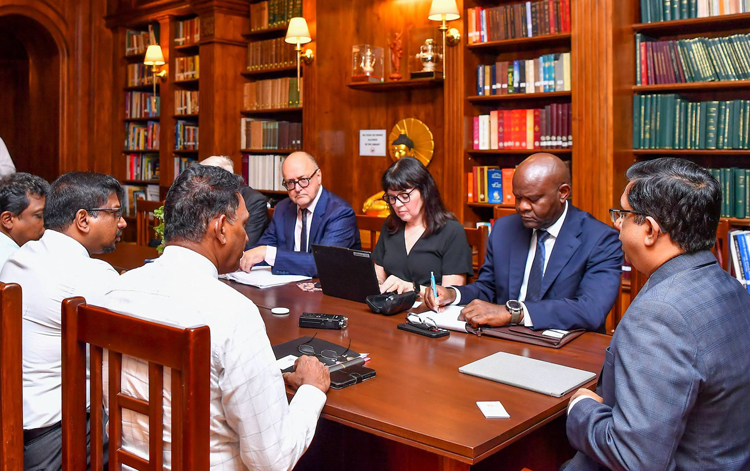
Regulators are signaling a significant shift in the way countries approach revenue reforms, and the recent talks between the International Monetary Fund (IMF) and Sri Lanka's Revenue Administration Reform and Modernisation Bureau (RARMB) are a testament to this. The discussion, which took place at the Presidential Secretariat, reviewed the reform process implemented over the past year under Sri Lanka's Medium-Term Revenue Strategy (MTRS).
The legal framework suggests that the IMF is keen on supporting countries in their efforts to modernize their public revenue systems. In this regard, the IMF delegation held separate discussions with senior officials of the Inland Revenue Department, the Ministry of Finance, Sri Lanka Customs, and the Department of Excise. The IMF representatives paid particular attention to plans for digital transformation projects, accelerating data integration, human resource and leadership development programs, and sustainable strategies to broaden the tax base.
Main Story
The RARMB, established in early 2025 under the leadership of President Anura Kumara Dissanayake with Cabinet approval, aims to modernize public revenue collection, improve the efficiency of tax administration, implement legal and institutional reforms, and provide integrated management of the Inland Revenue Department, Sri Lanka Customs, and the Department of Excise. As part of the Inland Revenue Department's reform program, its branches have been reorganized into Medium Corporate, Metro, and Regional Offices under a structured restructuring process.
- The reform program has led to an increase in tax compliance from 40-45% to 70-75%
- A new draft Bill to amend the Customs Ordinance has been prepared and submitted to the Legal Draftsman's Department
- Further measures, including simplifying the tariff structure, introducing paperless processes, and improving facilitation for exporters, are also scheduled for implementation
The Web3 Angle
Compliance-wise, the crypto and web3 space can learn from the IMF's approach to revenue reforms. The use of digital transformation projects, data integration, and sustainable strategies to broaden the tax base can be applied to the crypto space. For instance, the use of blockchain technology can help improve the efficiency of tax administration and provide a more transparent and secure way of collecting taxes.
- The use of blockchain technology can help improve the efficiency of tax administration
- Digital transformation projects can help broaden the tax base and increase tax compliance
- Sustainable strategies can help reduce the environmental impact of tax collection
Our Take
As a policy wonk, I believe that the IMF's approach to revenue reforms can be a game-changer for the crypto and web3 space. By providing technical assistance and advisory support, the IMF can help countries develop a more efficient and effective tax system. This, in turn, can help increase financial inclusion and reduce poverty.
The implications of this development are far-reaching, and it's essential to stay informed about the latest developments in the crypto and web3 space. As I always say, "Regulators are signaling a new era of cooperation and collaboration, and it's up to us to stay ahead of the curve."