I've seen this before - the public discourse on oil palm cultivation in Sri Lanka is riddled with misconceptions and misinformation. As someone who's lived through multiple market cycles, I know that it's essential to separate fact from fiction.
Back in 2017, I was involved in a project that aimed to promote sustainable agriculture practices in Sri Lanka. What many newcomers don't realize is that oil palm is not the environmental villain it's made out to be. In fact, when managed properly, it can be a valuable crop for the country's agricultural sector.
The Facts About Oil Palm
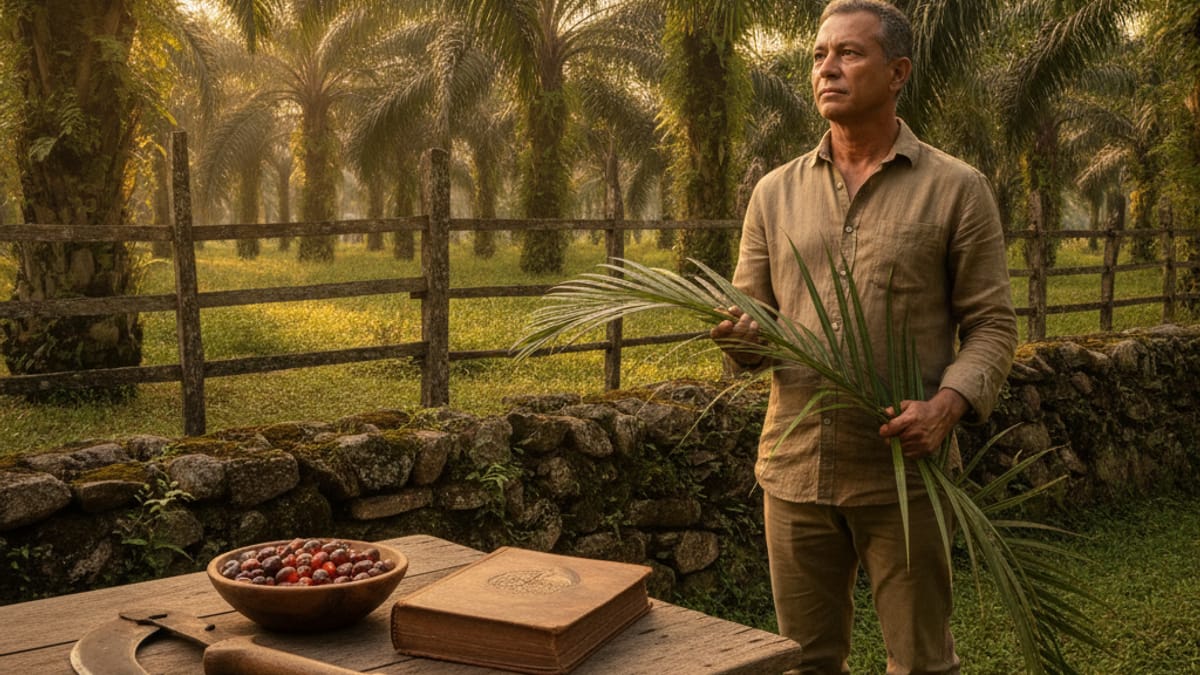
Oil palm cultivation in Sri Lanka has been executed entirely without the conversion of natural forests. It occupies around 10,400 hectares, mainly on degraded or marginal lands previously cultivated with rubber or tea. The soils found in these regions are largely Red Yellow Podzolic soils, which are naturally acidic, highly weathered, and relatively poor in fertility.
The allegation that oil palm cultivation drives extensive deforestation is invalid within the specific context of Sri Lanka's agricultural landscape. What's more, the available scientific evidence does not substantiate the claim that oil palm causes greater or more unusual soil degradation than tea, rubber, or coconut under similar conditions.
- Soil related problems are not crop-specific, but rather a function of land management practices
- Oil palm can be managed to conserve soil, recycle nutrients, and maintain productivity
- Responsible management practices, such as cover cropping and residue recycling, are essential for sustainable oil palm production

The Web3 Angle
While the article doesn't directly mention crypto or blockchain, it highlights the importance of responsible management practices and sustainable production. In the context of web3 and cryptocurrency, this translates to the need for transparency, accountability, and environmental sustainability. As we move forward in the crypto space, it's essential to consider the environmental impact of our actions and strive for sustainable practices.
What if we could use blockchain technology to promote sustainable agriculture practices and verify the origin of oil palm products? This could be a game-changer for the industry, allowing consumers to make informed choices and supporting farmers who adopt responsible management practices.
Our Take
As a battle-tested crypto veteran, I know that it's essential to look beyond the hype and focus on the fundamentals. In the case of oil palm cultivation in Sri Lanka, the facts are clear - it's not the environmental villain it's made out to be. With responsible management practices and sustainable production, oil palm can be a valuable crop for the country's agricultural sector.
So, what's the takeaway? It's time to separate fact from fiction and look at the scientific evidence. Oil palm cultivation in Sri Lanka is not the problem - it's the solution. By promoting sustainable agriculture practices and adopting responsible management techniques, we can create a more productive and sustainable plantation sector in Sri Lanka.