
I still remember the day I first heard about the impact of global events on local economies. It was during the 2017 Bitcoin rally, and I realized that economic trends can have far-reaching consequences.
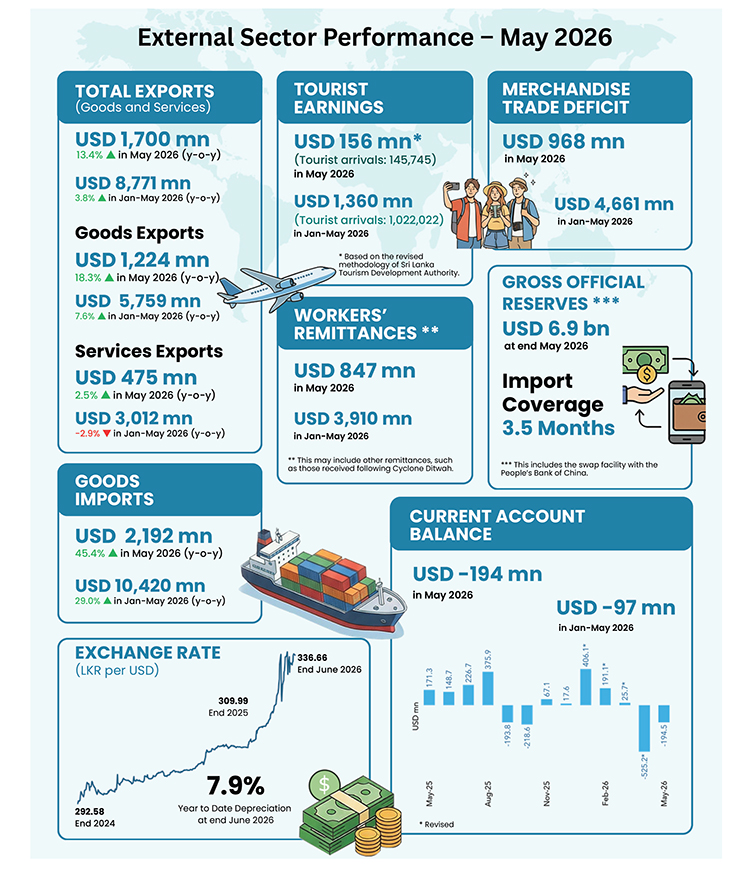
Sri Lanka's current account deficit is a pressing concern, with a deficit of $194 million in May 2026. The external current account recorded a deficit for the second consecutive month, mainly driven by the widened trade deficit and moderation in services surplus.
The Economic Impact
The merchandise trade deficit widened to $4.7 billion during January-May 2026, compared to $2.7 billion in the corresponding period of 2025. Expenditure on fuel imports increased by 112% year-on-year to $536 million in May 2026, driven by the increase in oil prices and volumes.
- The trade deficit is expected to continue, driven by high import costs and moderate export growth
- The services surplus contracted by 36.8% year-on-year to $143 million in May 2026, reflecting a higher growth in services outflows compared to inflows
- Tourist arrivals recorded a year-on-year growth of 9.6% in May 2026, with total arrivals during the first five months of the year surpassing one million
The Web3 Angle
From a tokenomics perspective, the current economic challenges in Sri Lanka highlight the need for innovative solutions. DeFi protocols can provide high-yield investment opportunities, stablecoins can offer a store of value, and blockchain-based systems can increase transparency and efficiency in trade finance.
APY hunters will appreciate the potential for high-yield investments in times of economic uncertainty. The protocol's TVL suggests a growing interest in DeFi solutions for traditional finance challenges. As the crypto market continues to evolve, we can expect to see more adoption of blockchain-based solutions in traditional finance.
- DeFi protocols can provide liquidity and high-yield investment opportunities
- Stablecoins can offer a store of value and reduce volatility
- Blockchain-based systems can increase transparency and efficiency in trade finance
Our Take
As a DeFi native, I'm excited to see the potential for blockchain-based solutions to address traditional finance challenges. The current economic trends in Sri Lanka highlight the need for innovative solutions, and DeFi protocols can provide a range of benefits, from high-yield investments to increased transparency and efficiency.
The future of finance is decentralized, and it's time for traditional finance to take notice. As we continue to navigate the complexities of global economics, one thing is clear: DeFi is here to stay, and it's time to get on board.