
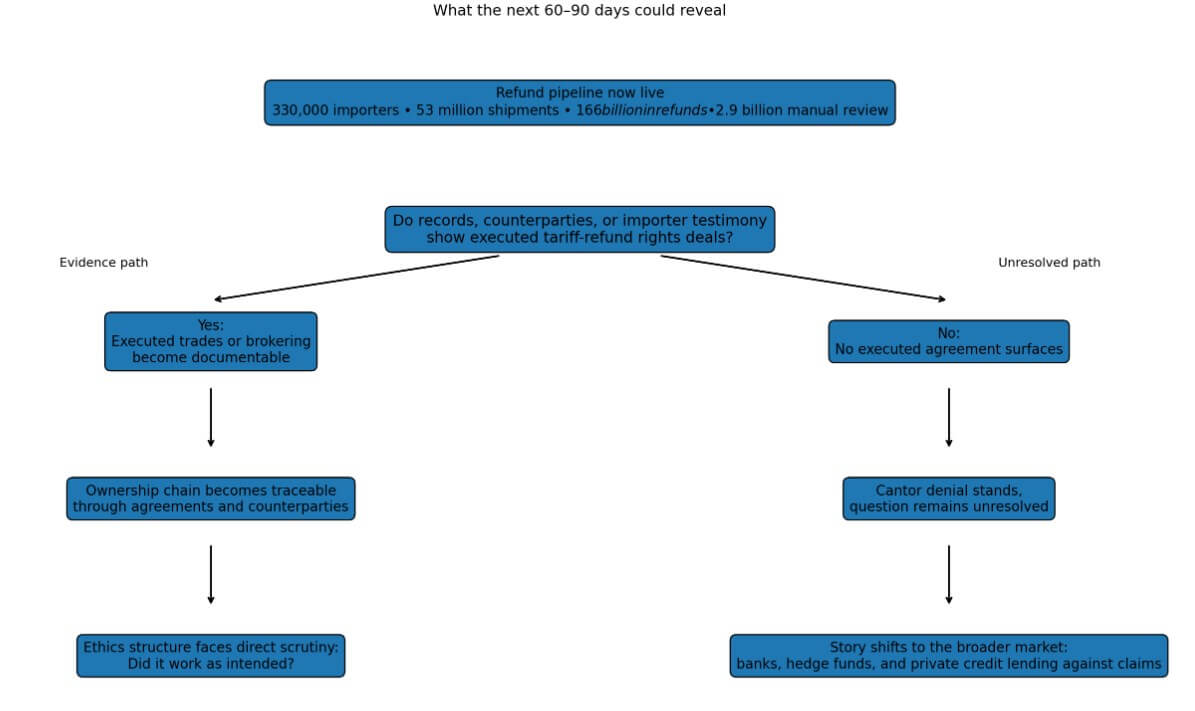
The data shows that the CAPE refund portal has already registered 56,497 importers for electronic refunds totaling $127 billion, out of roughly $166 billion the government expects to be returned after the Supreme Court ruled that IEEPA did not authorize President Donald Trump's tariffs.
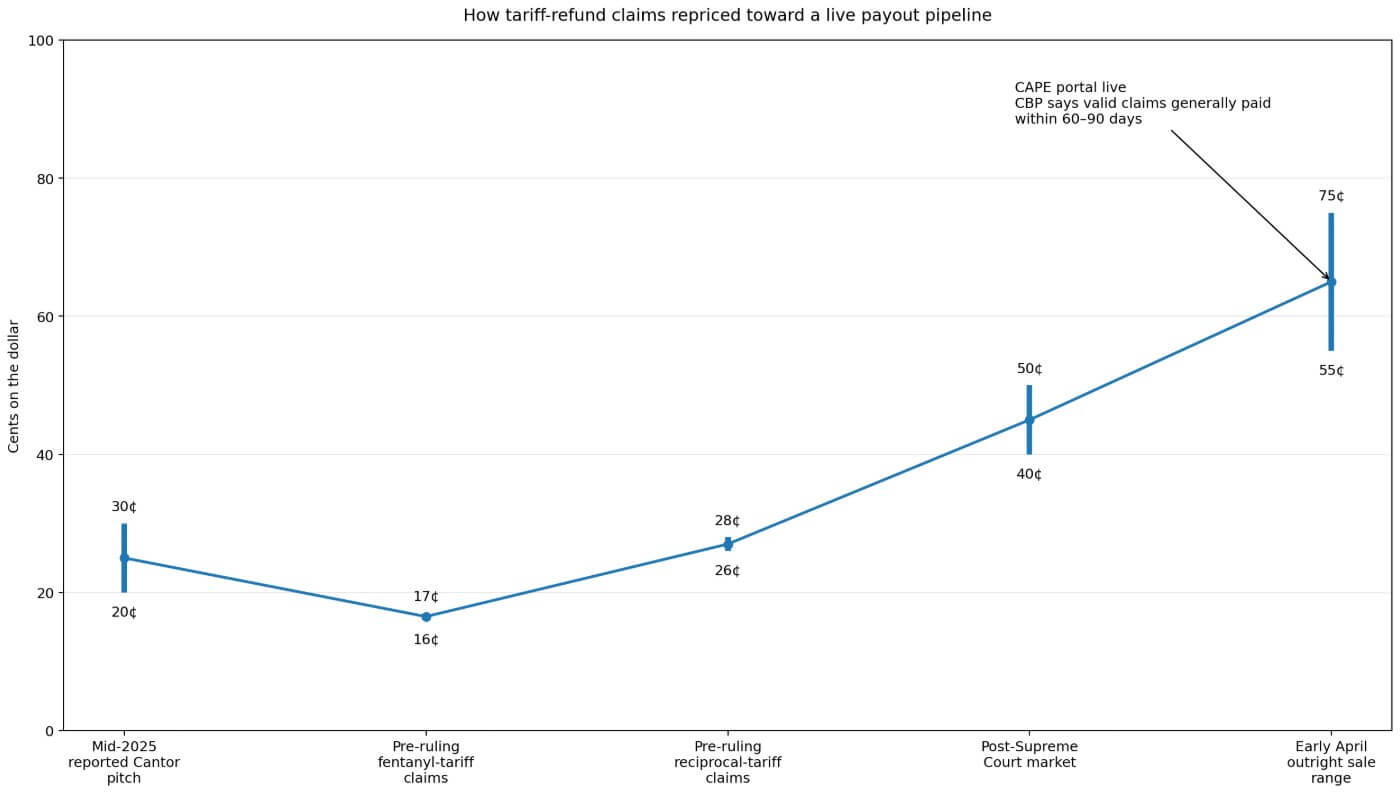
Looking at on-chain metrics, it's clear that the secondary market prices for tariff-refund claims have surged, reaching 40 to 50 cents on the dollar from roughly 16 to 17 cents for fentanyl-tariff claims and 26 to 28 cents for reciprocal-tariff claims before the decision. Statistically speaking, this represents a significant increase in value, with some importers now able to sell a $500,000 claim outright for roughly 55 to 75 cents on the dollar.
The Tariff Refund Controversy
The controversy surrounding Cantor Fitzgerald's reported purchase of tariff-refund rights for 20-30 cents on the dollar has sparked concerns about conflict of interest and ethics. As the Commerce Secretary, Howard Lutnick's role in shaping and defending the tariff policy has raised questions about his involvement in the firm's commercial activity.
- The reported purchase of tariff-refund rights for 20-30 cents on the dollar
- The firm's denial of the reporting, stating that the product was considered but not executed
- The congressional scrutiny of Lutnick's ethics structure and potential conflict of interest
Potential Outcomes Ahead
The next 60 to 90 days will be crucial in determining the outcome of this controversy. If executed tariff-refund deals surface, it could lead to direct scrutiny of Lutnick's ethics structure and potential conflict of interest. On the other hand, if no executed agreement surfaces, the operational story shifts toward the broader refund finance market, comprising commercial banks, hedge funds, and private credit funds.
- The CAPE portal processes refunds for importers of record and authorized brokers
- Private market buyers and lenders have transferred economic rights through contracts that live in term sheets, side letters, and private agreements
- The congressional scrutiny of Lutnick's ethics structure and potential conflict of interest
Our Take
As a data-driven analyst, I believe that the numbers tell a story. The data shows that the secondary market prices for tariff-refund claims have surged, and the repricing of these claims has significant implications for the market. However, the controversy surrounding Cantor Fitzgerald's reported purchase of tariff-refund rights for 20-30 cents on the dollar raises important questions about conflict of interest and ethics.
Ultimately, the outcome of this controversy will depend on the facts that come to light in the next 60 to 90 days. As the situation unfolds, it's essential to stay informed and up-to-date on the latest developments in the crypto news, web3 news, and blockchain news.